Social Media: Distraction, Drama, and Danger

It’s no secret that social media has taken over the lives of many people. Everywhere you look, students (and adults!) are glued to their screens, “doom scrolling”, and increasingly disconnected from the real world around them. When social media was taking off in the late 2000s, it was promoted as a way for people to connect with one another. Two decades later, this has proved to not just be an empty promise, but a bait and switch. While these negative effects are wide-reaching, they are most notably evident in students who are still developing socially, emotionally, and spiritually.

While there is a wide array of research being done on the effects of social media on teens and mental health, this post is not meant to add to or even report on that. If you are looking for something in that vein, I highly recommend The Anxious Generation by Jonathan Haidt. Instead, I want to share a few reflections emerging from my observations working directly with students

1. Distraction

I put this one first because it is the most obvious to those on the outside looking in. That is… if there were anyone on the outside looking in. To be honest, most people are on the inside, aware of the constant distraction and hoping to find a way out. And this is exactly what social media companies want. They make money off of our attention, so the more of it they can get, the more profitable their business. As the saying goes, “If something is free, YOU are the product.”

Most people go to social media for connection (hence the term “social” media) and instead, they get constant noise, distraction, and mental clutter. Teenagers are especially susceptible to this as their attention spans are still developing and the endless scroll of social media and its incessant notifications makes it even harder for them to focus on anything for longer than a few minutes at most. Instead of filling their minds with things that are true, honorable, and lovely (Philippians 4:8), they are bombarded with fleeting entertainment, arguments, and worldly influences that often pull them away from the most important things. Social Media created the soundbite culture we live in where few have the sustained attention necessary for interacting deeply with anything true, good, and beautiful.

2. Drama

This is one that bubbles over into my world on an almost weekly basis. The digital connections students make are a shallow representation of the embodied relationships were were designed for. As young people are– again– still developing their interpersonal skills, they lack the emotional intelligence necessary to sustain deep relationships that we all long for. Social media replaces deep relationships with shallow interactions—likes, comments, and quick messages that don’t foster true connection. The end result is that students say things digitally they would never say to a person’s face, or they fail to realize that a digital comment intended to be shared privately will be passed around to others. Hurt feelings and retaliation ensue all because of the illusion of safety created by the screen.

In my interactions over the years I have had to remind students countless times that “For lack of wood the fire goes out, and where there is no whisperer, quarreling ceases.” (Proverbs 26:20) as well as that “There is one whose rash words are like sword thrusts, but the tongue of the wise brings healing.” (Proverbs. 12:18) No, social media did not create the drama we see in the lives of students today, but it has enabled students access to more fuel than ever to throw on the fire before they have gained the maturity to know better.

3. Danger

Sadly, this is the most insidious of all. Again, students go to social media to connect with their friends but find themselves enslaved to the algorithm. Remember, the social media giants are selling your attention, so they want to serve you those posts that will keep your attention the longest. These algorithms have been fine-tuned over the years to a frightening degree. But it is not funny cat videos that people are drawn to. It is the depravity of our sin nature that quickly surfaces. As one example, the NY Times reported that within 30 minutes of signing up for TikTok, a 13-year-old girl was being shown videos promoting eating disorders.

These are the dangers that lurk on social media. There is no earthly reason for a 13-year-old to be shown this content, and social media companies make it nearly impossible for parents to restrict access to these types of posts. The best answer to protecting students from these dangers is simple– stay away.

If you want to understand more about how social media is affecting teenagers, I highly recommend The Anxious Generation by Jonathan Haidt. His research lays out the real dangers and challenges of the digital world and offers insight into how we as parents, youth leaders, and teachers can work together to protect them and shepherd them through this age of rapid social, emotional, and spiritual development. One caveat to Haidt’s book is that it is not written from a Christian perspective. In fact, he clearly states that he is an atheist while ironically writing an entire chapter using religious/spiritual language to describe the necessity of unplugging from the digital world.

Where do we go from here? The dangers of social media are real, but passivity isn’t an option. Here are a few simple steps you can take right away:

  1. Start the conversation — Talk with your students honestly about distraction, drama, and danger online. Listen more than you lecture.
  2. Set clear boundaries — Limit screen time, require devices to stay out of bedrooms at night, and model the same discipline in your own habits.
  3. Replace, don’t just remove — Encourage real-world activities: family meals, face-to-face friendships, reading, serving, and worship.
  4. Stay connected spiritually — Remind students often that their worth is not found in likes or followers, but in being created in God’s image and redeemed by Christ.

Social media may be designed to consume their attention, but we can equip this generation to live wisely, love deeply, and fix their eyes on what truly matters.

Let’s not just warn them about the dangers—let’s disciple them toward something better.

Teaching Disciple-Making Principles for Future Leaders

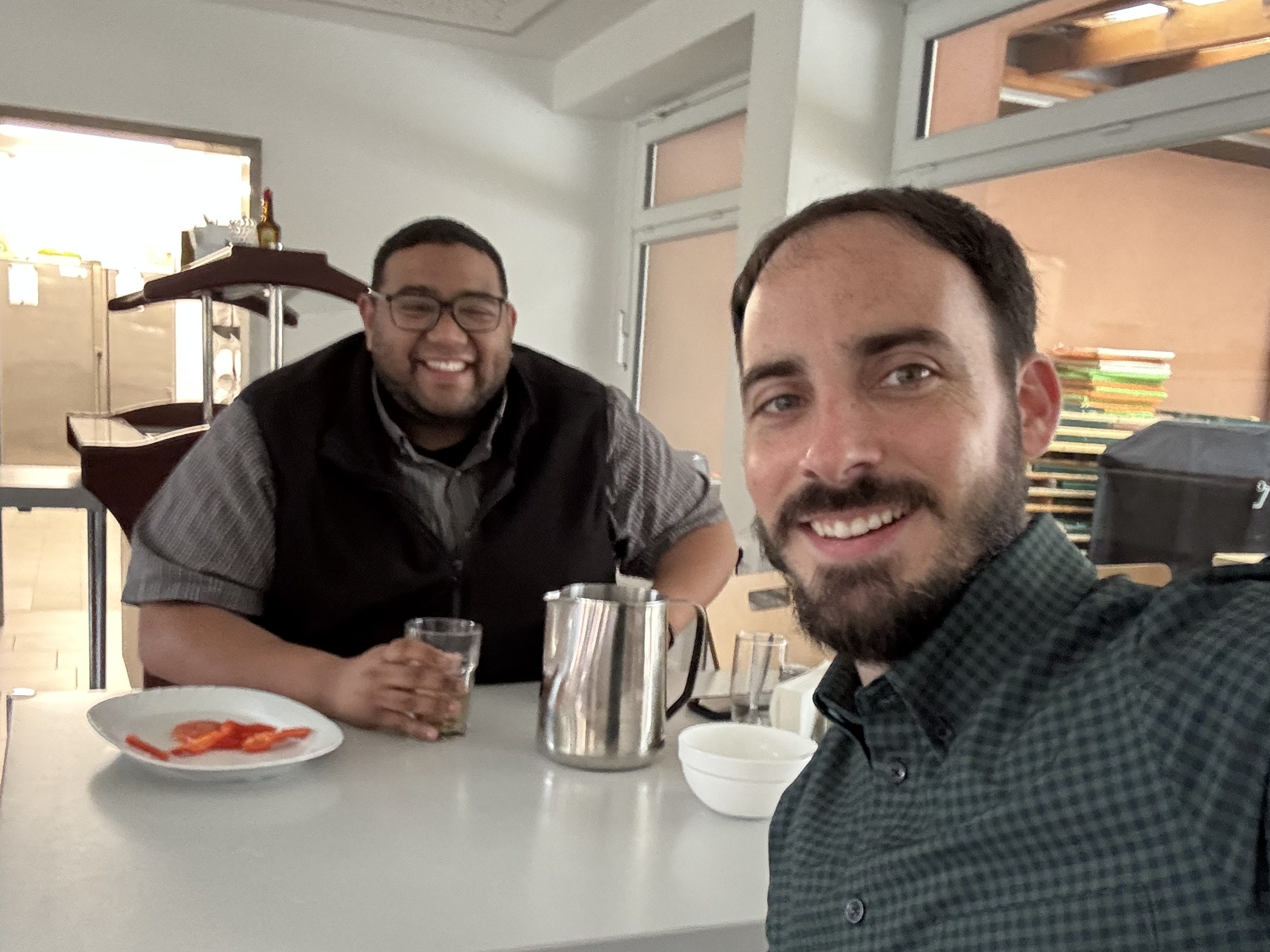
Teaching through a translator can be difficult, but Max and I work very well together!

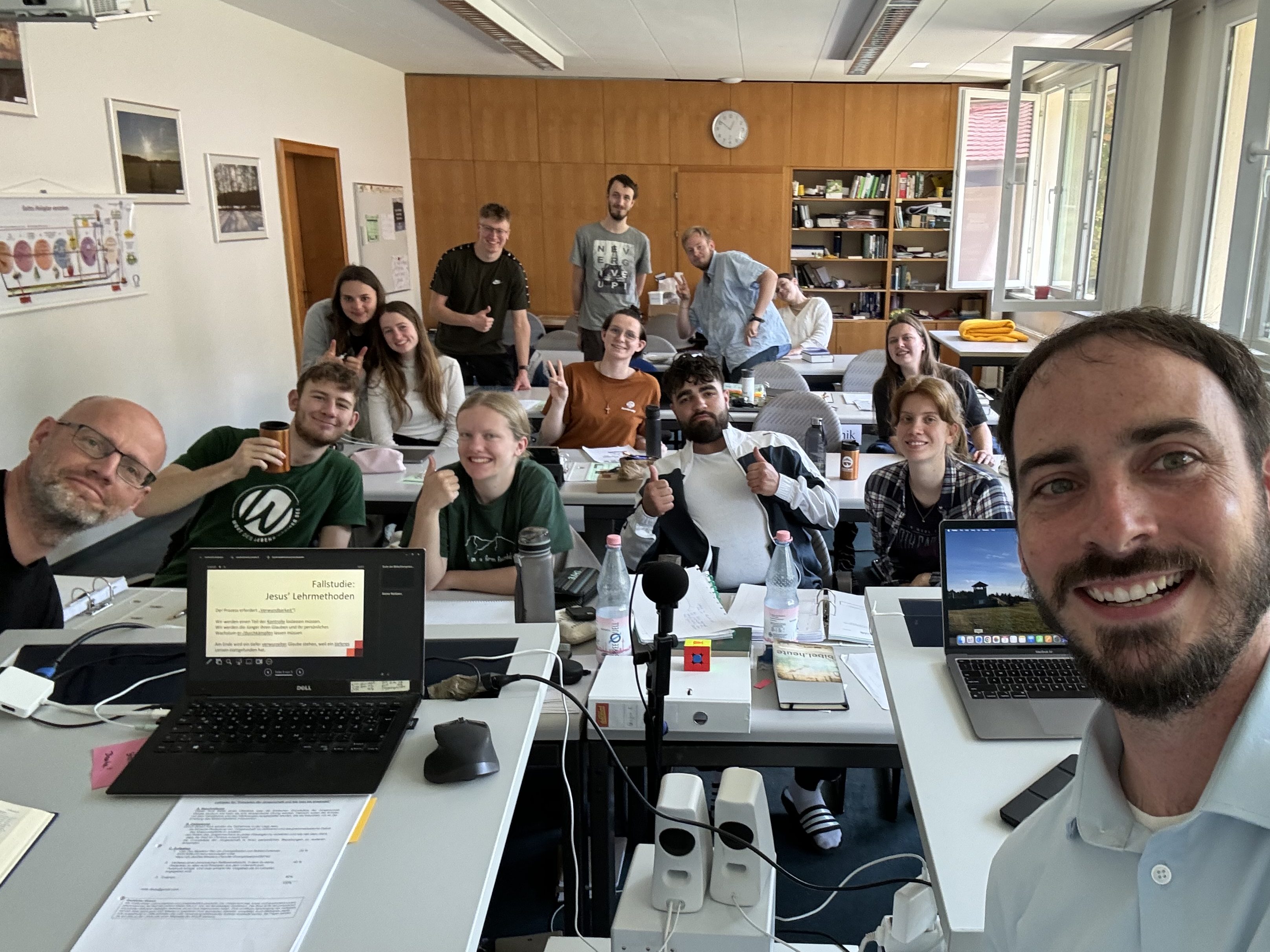
 For the fourth time, I have the incredible opportunity to serve at the Word of Life Bible Institute in Berlin, Germany, by teaching a week-long intensive course to a small group of dedicated students who are preparing to serve the Lord in Germany and throughout Europe. My prayer is that this time will not only provide them with valuable ministry training but also build up their hearts as they prepare to serve in their own local churches.

The course I will be teaching focuses on the principles of disciple-making. We will be studying the example of Jesus’s ministry with His disciples, looking closely at the principles He employed to raise up and send out His followers. The goal is to provide these students with a biblical and practical framework they can apply directly to their future ministries, whether they are leading a small group, planting a church, or discipling a new believer one-on-one. I am confident that these are foundational truths that will serve them well for years to come.

In addition to the time in the classroom, these trips have also been a time to pour into the staff at the Bible Institute. Over the last 4 years, my wife and I have gotten to know the new staff who have joined the team since God called us back to the States in 2014. This year has been an especially tough year for the team there, with the transition of several long-standing leaders to other areas of ministry in Germany. Max Schüler (pictured with me above), the Academic Dean at the Bible school and my translator in the classroom, has stepped up to fill the gap as the team continues to adjust to this next season of ministry. He continues to inject a passion for the Word and the Church into these students as they train for future ministry, and he has become a good friend over the last several years. Paul Troxler, with whom we served while we lived in Germany, has temporarily come out of retirement to also lend a hand in leading the ministry through this time of transition. I pray that I will have opportunities to refresh and encourage these men and the rest of the staff like Onesephorus did for the Apostle Paul (2 Tim. 1:16).

This year, I also have the opportunity to speak at the “Thank You Weekend” retreat for the summer camp staff at Word of Life. Each summer, they host 8 weeks of camp, staffed by current and former students along with high school volunteers. In the fall, they invite these students back for a fun weekend of refreshment. I’m excited to reconnect with many former students and campers from when we served there and encourage them in the ministry God has called them to.

Teddy is a former student who is now a local youth pastor and still serves every summer at the camps

It continues to be such an honor and a blessing to partner with the ministry in Germany, and I know that there is no way we would be able to do this without you all “holding the ropes” as I make these trips. There are two ways you can specifically be partners in this ministry. First, please be in prayer for the whole process leading up to and during this trip. You can pray specifically:

  • For wisdom as I update the material for the class and prepare for the weekend sessions.
  • For safety as I travel and deal with jet lag while teaching. Last year, due to a missed connection and unplanned overnight stay in NY, I landed at 8 am Tuesday morning and was in the classroom teaching at 11 am!
  • For my family as I am away for a week.
  • For the students’ hearts to be receptive to the Word and the conversations that happen throughout the week, both in the classroom and around campus during the “downtime.”
  • For clear communication during the teaching times as they will be done through a translator. 
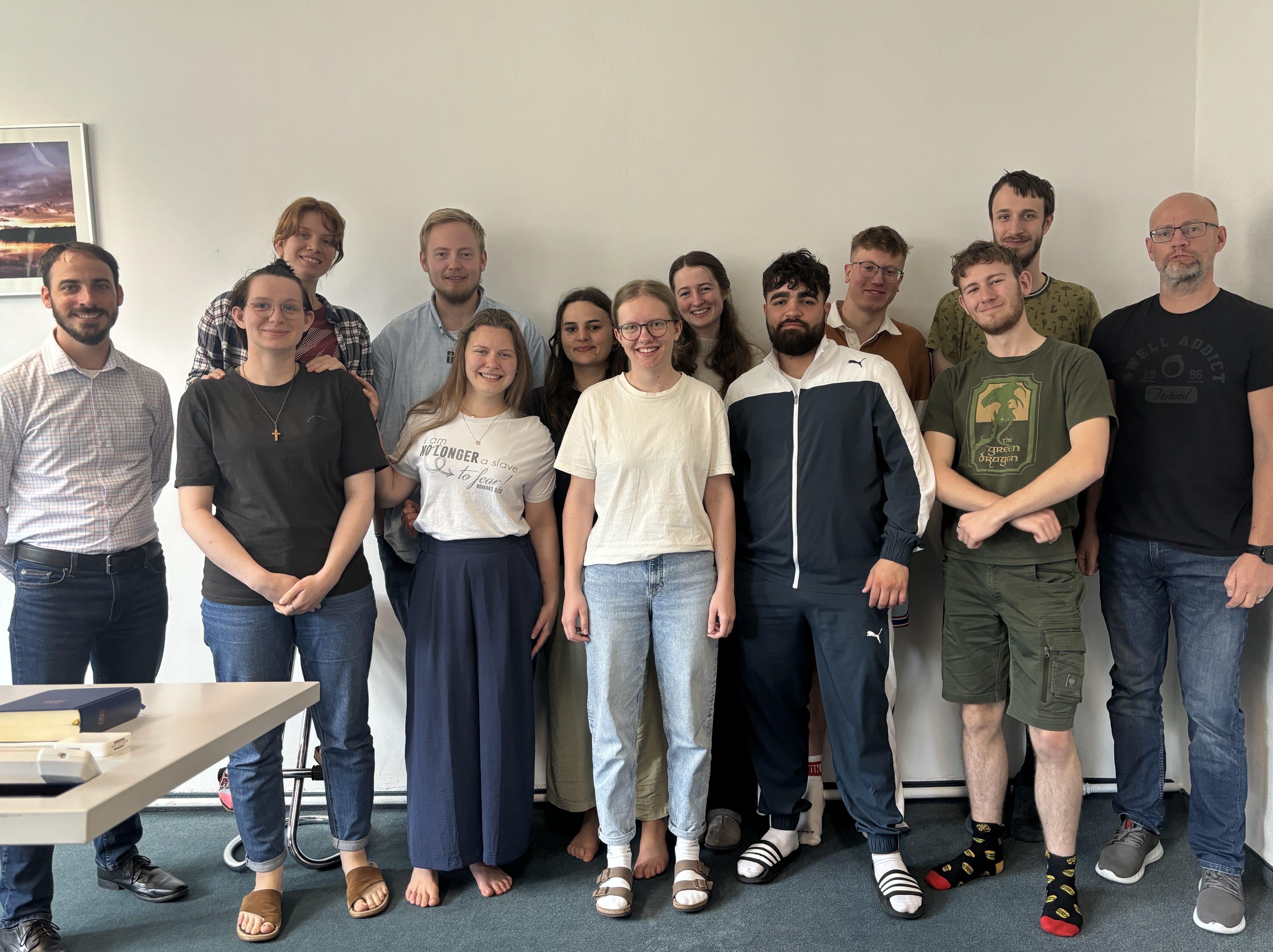
Each class is unquie and by the end of the week I feel like a member of the family

Second, in an effort to keep the tuition low for students at the Bible Institute, I will once again be raising support to cover the costs of travel. Our goal is to raise $1,400 to fully fund this trip. Would you prayerfully consider partnering with us financially? If you would like to give towards this, you can do so through our church, Freedom Baptist in Goldsboro. You can give online at freedomgoldsboro.org/give, selecting the “Germany Missions Trip” fund.

We’re looking forward to all that God is going to do during this week of ministry and through these students as they continue to serve in their churches throughout Europe!

MTD and Kids Ministry

Moralistic Therapeutic Deism. Now that’s quite a term if I’ve ever heard one. But arguably this is the number one religion amongst youth in America today.1 So the question is, what is Moralistic Therapeutic Deism (MTD for short)? And where did it come from?

What is MTD?

MTD is a vaguely religious worldview in which people are expected to be “good” (by who’s standards?) and believe in the existence of some type of god or higher power who is uninvolved in a person’s life unless specifically needed. This term originated from the National Study of Youth and Religion at the University of North Carolina at Chapel Hill, led by researcher Christian Smith. After researching the religious beliefs of over 3,000 students, Smith outlines the five core beliefs of an MTD adherent. Those are:

  1. “A god exists who created and ordered the world and watches over human life on earth.” 
  2. “God wants people to be good, nice, and fair to each other, as taught in the Bible and by most world religions.” 
  3. “The central goal of life is to be happy and to feel good about oneself.” 
  4. “God does not need to be particularly involved in one’s life except when God is needed to resolve a problem.” 
  5. “Good people go to heaven when they die.”2

Where did MTD come from?

This question is a little harder to answer than the previous one. Some may trace this vague religious belief back to the founding fathers of America and their pseudo-Christian beliefs (See the Thomas Jefferson Bible). Others may point to one cultural trend or another and the development of a postmodern society. I am not here to say that any of those observations are wrong. What I do want to point out is something I have observed on my own through the last decade-plus of serving in youth ministry. 

Are you ready for it? 

We created MTD. We did it. We developed a generation of students who are Moralistic Therapeutic Deists. 

How is that?

Look at the typical Kid’s ministry at a typical church. Or even Youth Ministry. What are we teaching about God? Who is He? Why did He save us? Why do we pray? What is our role?

If you were to ask a child in your church’s ministry, how would they answer those questions? 

Kids and Teens can handle deep spiritual truths if presented in the right way. The problem is, they are an afterthought. We stick an unwitting volunteer in Children’s Church and tell them to watch the kids while the adults go to “big church,” and what happens is they play games and sing songs until the volunteer can’t take it anymore. Then a VeggieTales video is popped in the DVD player so the kids are pacified until the parents can pick them up. Essentially, we just have a babysitting service with some Jesus dust sprinkled on top. 

Our children’s ministries should not just be a babysitting service with some “Jesus dust” sprinkled on top. 

Youth Ministry isn’t much better. We have a Youth Pastor who is cool and fun and plans exciting activities to attract teens and their friends, building a mini church-within-a-church. To justify the ministry there are motivational speeches seasoned with enough Bible to make it passible for a church setting. Every “talk” is brought back to what this means for them and being “relevant” so that the student thinks they are the center of the universe and that the Bible is about them and their lives. 

Conclusion

This sounds harsh, and it is. Obviously, this is not representative of every church or youth ministry. There are many who volunteer to produce excellent discipleship environments for kids and teens and work tirelessly to train the next generation in the Word of God. But when MTD is so prevalent in our culture and amongst professing believers, there is obviously somewhere we are missing the mark. 

So what can be done? 

Here is a short (and by no means exhaustive) list of places you can start. 

  1. Train solid leaders

One of the shortfalls of kids ministry is in the area of volunteers. Usually, it is thrown to the old ladies and young teens looking for service hours. Not that either of those groups is bad at all! But your ministry is only as good as your leadership, so spend time training solid leaders. Send them to conferences. Do recurring training in-house. Teach them to share the Gospel. 

I fully believe our youth ministry leaders should be some of the best trained in the church. That’s why I went and got my Master’s Degree. I don’t plan on being a Senior Pastor, but I wanted to be as well prepared as possible to teach and develop my students. No, not everyone needs formal theological education from a Seminary. But we do owe it to our kids and families to put well-prepared leaders in those ministries. And that can even come in the form of “on-the-job” training under the mentorship of a solid leader (2 Tim. 2:2). 

  1. Develop a comprehensive scope-and-sequence

Training isn’t enough. Your leaders need solid tools! 

There is this general aversion to using curriculum in Youth ministry (not so much kids ministry) and I am not sure why. Maybe because their trained youth pastors assume that because they went to Bible college they should develop their own material? But that is just crazy! Curriculum developers spend countless man-hours writing, editing, and producing high-quality material so you can spend less time on lesson prep and more time developing relationships. That is a good thing!

Another reason to use curriculum is that most of these publishers create material that integrates across grade levels! Take Lifeway’s Gospel Project as an example. They have curriculum that walks through the Bible so that every person in a Church (read… “whole families”) is studying the same passage at the same time. Or my favorite is the Youth Ministry material developed by Word of Life Fellowship. They take each age group through an age-appropriate cycle of Bible Survey and Bible Doctrines so that by the time a student graduates from High School they will have worked through every area of theology and every book of the Bible. 

You need a roadmap. You need a plan. That way, you’ll know where you are going, and nothing gets lost on the way. 

  1. Invest in the future

I teased this earlier in option 1, but you need to start training tomorrow’s leaders today. That teen that needs service hours? Jump at that! Put them with a mature leader who can develop them. Give them increasingly more responsibility and opportunities. Get them invested and using their gifts so that when they graduate, they are not floundering and disconnected but already know how they are a part of the Body of Christ. 

As I said, this is by no means an exhaustive list. This is a place to start. Invest in the next generation and in the leaders who pour into their lives!

  1. https://www.christianpost.com/news/moralistic-therapeutic-deism-the-new-american-religion-6266/ ↩︎
  2. Smith, Christian (2005). Soul Searching: The Religious and Spiritual Lives of American Teenagers. With Lundquist Denton, Melina. New York: Oxford University Press. doi:10.1093/019518095X.001.0001. ISBN 978-0-19-803997-6. ↩︎

Why I Read Fiction

I read a lot of books. Not as many as some, mind you, but more than the average person. (Side note: In going down a short rabbit trail of how many books the average American reads in a year, the linked article notes that less than half of the respondents actually read a book in the previous 12 months… that is probably worthy of another post on its own)

In the amount of reading, I strive for a decent balance of both fiction and non-fiction. This is slightly weighted more towards non-fiction with a balance between Spiritual/Bible study, self-improvement/leadership, and other general categories of nerdy pursuit. The last few years have been weighted even more so in that direction with my Graduate studies leading into my current doctoral program. 

Even still, I find myself needing that change of pace offered by a good fiction book. Breaks between semesters like those around summer and Christmas allow that time to get lost in these books. This is in opposition to a remark I’ve heard occasionally over the years– even as recently as last month from a college professor– that is that reading fiction should be done sparingly if at all. 

This got me thinking: “Why do I read fiction.” 

So, naturally, I sat down and wrote out a *few* of the reasons I read fiction. This was by no means an exhaustive list, but it is the ones that have stuck out to me most over the years. As I read through my list I noticed that they all boiled down to the following two ideas.

  1. Reading fiction gives your mind a break without turning it to mush. 

This is a major problem with other forms of entertainment and diversion. Entertainment that is screen-based has progressed further down the path of extremes. TV shows go to extreme measures to hold viewers’ attention, Netflix auto-plays the next episode in the series in order to promote “binge-watching,” and social media platforms from Facebook to Youtube to TikTok use highly refined algorithms to curate individualized streams of the most addicting content leading to the dreaded “doom-scrolling.” These culturally normative forms of diversion have only eroded our attention span to the point that concentrating on cognitively demanding topics is seen as a superpower in the modern workplace. 

The answer, then, is to replace attention-sapping recreation with higher forms of entertainment. When your brain needs a break, turning to addictive, screen-based diversion is the mental equivalent of eating junk food because you are hungry. Instead, consuming high-quality entertainment satisfies the mental hunger for diversion while avoiding the inevitable crash after consuming too much addictive material. 

Good fiction books solve this problem. They divert the attention and allow the mind to rest while also feeding it quality content. And understandably, this is not the only form of high-quality entertainment. There are a plethora of forms of fine art that would satisfy this need. From actual art to music, when humans consume fine art, they are enjoying one of the chief differentiators between humanity and the rest of creation. We are created in the image of God and therefore create like our Creator. We are reflecting Him to the world around us. So, in enjoying the creations of others we are enjoying one of God’s good gifts to humanity. And, as we’ll see in a second, weaving a creative story is one creative act that God has been doing throughout history. 

  1. Reading fiction captures the imagination. 

The second major reason I read fiction and encourage others to do the same is that it captures the imagination. Children are highly skilled at imaginative play. They see things that are not there and act as if they were. They can turn an entire living room into a vacation village, complete with cabins, restaurants, and a town square, and then spend hours interacting with this imagined reality. 

Adults, on the other hand, struggle with imagination. Our thoughts are on the concrete reality around us. We struggle even to see things as they could be and not simply as they are. Fiction takes us out of the world we are in and transports us to other realities we would not otherwise be able to imagine. The words on the page paint an image in our minds of places and people, and plant in our hearts desires and values we can later realize in the “real world.”

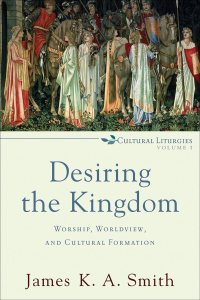
This is exactly the kind of thing that James K.A. Smith talks about in his books Desiring the Kingdom and You Are What You Love. Too often, we are more concerned with the cold reality of life, that we miss the fact that our worldview is shaped by forces that skip the rational portion of our being and pull directly at our hearts. Fiction books do that like no other medium. The act of reading seems like an exercise of the mind, but in reality, it is an exercise of the heart. The stories in books capture our imagination in ways that rational arguments never can. 

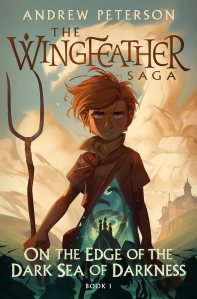
Many other authors have echoed this sentiment. C.S. Lewis, author of the famed Chronicles of Narnia and less well-known but just as excellent Space Trilogy, wrote “Since it is so likely that children will meet cruel enemies, let them at least have heard of brave knights and heroic courage. Otherwise, you are making their destiny not brighter but darker.”1 G. K. Chesterton similarly remarked “Fairy tales do not tell children the dragons exist. Children already know that dragons exist. Fairy tales tell children the dragons can be killed.” More recently, Andrew Peterson, author of the Wingfeather Saga (a highly recommended trilogy! I’d place it up there with the Chronicles of Narnia and the Lord of the Rings), put this all together by saying “if you want someone to know the truth, tell them the truth. If you want someone to love the truth tell them a story.” 

Stories capture the imagination and direct our hearts toward the noble character traits we should desire to exhibit. They also call us to live into the true story that God is weaving throughout history. In fact, the Bible itself tells one big story made up of smaller, interrelated stories. It begins at creation with God ordaining humanity to rule as his regents over the earth. Our sin broke the perfect fellowship we shared with Him and cursed His good creation. Everything since then has been God’s progressive work of redeeming His fallen creation, accomplished at the cross and ultimately completed in the restoration of the new Heavens and new earth. When we see fictional characters fighting back against evil and eventually seeing good triumph, it is a reflection of the true story of the greatest hero triumphing over evil at the empty tomb. 

So, my recommendation is to allow these fictional tales to draw you in. Notice those themes and celebrate the wonderful works of art that capture your imagination and ultimately lift the eyes of your heart to see the reflections of our Savior, longing for the day of our future restoration. That will be the happiest “happily ever after.”

God’s Sovereignty in Nature: A Reflection on Psalm 147

This week, the southeast was served a rare winter treat: a measurable snowfall! As I looked out the window and saw the ground blanketed in snow, I was reminded of the beauty and power of God described in Psalm 147:15-18. This passage paints a vivid picture of God’s sovereignty over creation:

“He sends out his command to the earth; his word runs swiftly. He gives snow like wool; he scatters frost like ashes. He hurls down his crystals of ice like crumbs; who can stand before his cold? He sends out his word, and melts them; he makes his wind blow and the waters flow.”

The snow, frost, and ice are all under His command. With a single word, He sends the snow to cover the earth and melts it the next day. Through every season and weather pattern, God reminds us of His authority over creation and His power to sustain it.

Beyond the beauty of snow, these moments in nature are a gift—a reminder to turn our hearts to worship the Creator. The variety of weather and seasons reflects His creativity, His care, and His power.

The next time you see the snow falling or feel the chill of frost, let it remind you of the One who made it all. He is an amazing God, worthy of our praise.

2024 Year in Books

Here we are again, winding down another year and looking ahead to a new one. I know I haven’t posted since the last year-in-books book review, but it’s time for another post of my books of the year!

By way of intro, I have been keeping track of all my reading in Goodreads. Head over there and follow me to see all my reviews and what I’m currently reading. After blowing past the goal I set in my Goodreads 2023 challenge, I set a realistic goal of 40 this year. I ended up setting a new record of 48 books this year, so with that, let’s take a look at the highlights!

Best Fiction Book(s)

I ended up reading a good amount of fiction this year, even with finishing a Master’s degree and starting a Doctoral program. I have found that my brain needs a change of pace so that I can wind down in the evenings. I also tend to read a book or two on breaks between semesters, so that raises my total fiction count.

I reread the Lord of the Rings trilogy this year. Those are classics and everyone should read them at least once! Maybe I will write a whole post on classic works by J.R.R. Tolkien and C.S. Lewis. For now, just know they are still in the rotation.

A new read, however, was A.G. Riddle’s Lost in Time. I was introduced to Riddle’s work back in 2020 with “The Long Winter” Series. I needed something new at the end of the year, so I went back and picked up some of his other works. Lost in Time is a stand-alone sci-fi book that mixes together science fiction, time travel, and a murder mystery. It starts off really fast-paced and throws several twists in at the end. It’s a well-done book for those who enjoy sci-fi and time travel!

Most Thought-Provoking Book

The most thought-provoking book I read was Carl Trueman’s Crisis of Confidence. I read this to write an academic book review for the Biblical Higher Education Journal, so hopefully that will be published in the spring (in which case, I’ll link to it here). But I was excited to read and review this book, and it didn’t disappoint. Carl Trueman has written several other cultural critiques recently, and this book hits home for those in the American Church. He begins by laying out the case as to why modern culture has a negative posture towards declarations of faith such as the ancient creeds. What it comes down to is the individualistic nature of society today is rejecting any source of external authority and increasingly turning inward in search of truth and stability. Trueman then lays out the case for returning to the orthodox creeds and confessions as the foundation of our faith. Ultimately, these creeds line up with the Biblical command to “Follow the pattern of sound words…” (1 Tim. 1:13) and can reorient us as believers toward an orthodox “faith that was once for all delivered to the saints” (Jude 3).

I highly recommend you pick up a copy of Crisis of Confidence as you head into the new year. It is not a long read, and it will cause you to critically evaluate your faith (in a good way!)

Most Fun Book Series for the Family

Over the summer, we read The Wishmaker and its sequel The Wishbreaker out loud as a family. I’ll resist going off on a tangent about reading out loud to your kids, but just suffice it to say my girls (10 and 7) loved it! It was fun to follow along with the kids in the story who were trying to accomplish their quest by making wishes of their newfound genies and suffering the consequences of those choices. If you want a good series to read aloud to your kids, this was a fun one! And your kids will enjoy listening to you try to read all the various rhymes and riddles… especially if you get into it with different voices!

Honorable Mention

It feels bad giving this the “honorable mention,” but I had already given the “most thought-provoking” award, and couldn’t come up with another category for The Anxious Generation. This was a dense read, and I’m thankful I got it on audio. Jonathan Haidt dives deep into the reason GenZ and Gen Alpha are experiencing a mental health crisis. He traces it back to what he calls “the great rewiring” in the 2010’s when childhood shifted from primarily play-based to primarily “phone-based.” There is a lot in here and it would do it an injustice to try to summarize it all in one paragraph. The bottom line, however, is that parents, schools, and governments need to work together to protect children from the damage that can be done by allowing so much unprotected screen time and so little free play. I am thankful my school already has gone phone-free and I am more convinced than ever that delaying my children from receiving devices until well into their teenage years is the right move!

Fun Statistics

I’d love to write a short review on all the books I read this year, but this post is already almost 1,000 words, and I want people to actually read this! So let’s just wrap up with some fun stats and then call it a day. And don’t forget to head on over to Goodreads and give me a follow to see the list and follow along with my reading in 2025!

First book of the year: The Warden and the Wolf King (I wrote about this series in last year’s reviews. We loved it so much we bought the whole series for our kids this Christmas! It’s worth it to get the hardback boxed set!)

Shortest book: Mind your Writing– 97

Longest book: Quantum Radio562

Total pages read:15,055 (only counting completed books)

Total books read: 48

2023 Year in Books

Here we are again, winding down another year and looking ahead to a new one. And all my bibliophiles out there know what that means! It’s time for my 2023 book roundup! 

By way of intro, I have been keeping track of all my reading in Goodreads. Head over there and follow me to see all my reviews and what I’m currently reading. The past few years I’ve had a reading goal that has increased year-over-year. Since I was focusing on my Seminary work this year, I didn’t really have a set goal even though I put “35” in my Goodreads 2023 challenge. I had read 34, 40, and 45 for the last 3 years, so 35 was really a low-ball number. I ended up reading 43 books this year, so with that, let’s take a look at the highlights!

Best Fiction Book(s)

First, for the fun stuff! After trying previously to get my oldest daughter into reading the Wingfeather Saga by Andrew Peterson, we both finally got into it right before Christmas break! She got a head start because she had checked it out from the school library to keep in her desk to read during “down time” in the classroom. When she brought that copy home, I started to catch up to her. It was fun to keep that little completion going, but quite honestly, the book kept our attention so much we just couldn’t put it down!

It’s an awesome story about three siblings, their mother and grandfather who are trying to survive in a world overrun by evil. There are some pretty obvious biblical worldview themes that emerge as the characters grapple with the situation they are in both in the original setting as well as the treacherous path their lives are sent on. In my opinion, it is an epic series like the Lord of the Rings but aimed at the middle grades and with more overt biblical worldview without being obnoxious about it. I’m thankful for a school library that has this complete set and encourages to have a stead diet of good literature (and shout out to our school librarian who also happens to be my Mom!)

Most Thought-Provoking Book

The most thought provoking book goes to Desiring the Kingdom by James K.A. Smith. This was required reading for a course I was taking- Christian Life and Witness at Dallas Seminary. It is the first of a trilogy James Smith wrote to help people think about worldview and culture from a different perspective. Desiring the Kingdom is all about how humans are ultimately not rational beings, but loving beings. God designed us to love. That is part of what it means to be made in the image of God. As such, the curse of sin has redirected our loves so that we no longer love what is good. 

Along with this, the world seeks to keep out attention directed at things other than God and His Kingdom. It does this by using our cultural rituals (Smith calls these “liturgies”) to shape our desires. Smith walks the reader through several eye-opening examples of this and then gives them the tools to evaluate the rituals that have had an effect on their own lives. Armed with this information, readers are better equipped to identify these rituals and enact rituals that will act as a type of counter-formational force to better direct their hearts towards the Kingdom. 

As I said, this was the most thought-provoking book of the year. Smith said anything’s I knew already but gave me better wording with which to articulate the things I had been observing over the last decade or so serving in youth ministry. The things families, churches and schools do, the rhythms of our schedules and the priorities we make all work together to form he heat of our children. What is most terrifying is that most of this comes as a “default” that has been absorbed through the culture and is not intentional and definitely is not biblical. Expect to see more thoughts in this space moving forward!

Most Surprisingly Helpful Book

The Non-Designer’s Design Book was the most surprising read for me. Again, this was required reading, but I was delightfully surprised at how helpful it was. I don’t do much design work except when necessary for presentations or websites and I’ve found myself doing less of it recently. This book was helpful because it articulated things I already knew and could see in my designs, but gave me the “why” behind it. If you do any design work at all (especially presentations or social media posts!!) this is a great little book to help you design high-quality stuff with only a few weeks to your work. 

Best Theology Book

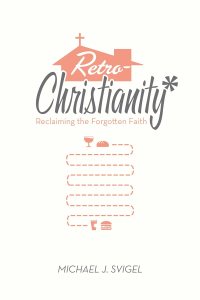
I took Ecclesiology in the Spring semester, and my professor’s book, RetroChristianity, was awesome! One of the phrases I’ve heard through the years (nd even said myself) is that “the methods may change but the message stays the same.” Dr. Svigel provides a good framework for evaluating what methods are free to change and which should never be changed. There is a reason some traditions have stood the test of time, and there are some that have been rejected that should have remained. The whole point is to reclaim the good things that have slipped away over time in the development of the church, and to sure up the foundations for the good that remains while also providing and lens through which we can evaluate future innovations in church methods. 

Fun Statistics

I’d love to write a short review on all the books I read this year, but this post is already almost 1,000 words, and I want people to actually read this! So lets just wrap up with some fun stats and then call it a day. And don’t forget to head on over to Goodreads and give me a follow to see the list and follow along with my reading in 2024!

Shortest book: Truth Weaving– 98

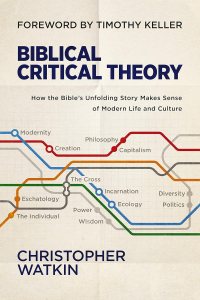
Longest book: Biblical Critical Theory– 672

Total pages read: 11,832 (only counting completed books)

Total books read: 43

Teaching Missions Trip

 We want to share an exciting opportunity that God has put in front of us. Nathan has been invited to teach a course on the book of Ephesians at the Word of Life Bible Institute in Germany the week of March 26th. Many of you know that this was the ministry we first served in 11 years ago as part of a missionary internship. The WOLBI ministry is a one year college level program designed around an intense focus on Bible study, discipleship, and ministry training. While we were previously serving there, we primarily focused on the discipleship and ministry training side of things, so it is exciting to be able to now serve by teaching this week-long intensive course on Ephesians.

We know that this is a ministry too big for us to accomplish on our own, so we are asking you to partner with us! There are two ways you can be involved as we prepare and go on this trip. First, please be in prayer for the whole  process leading up to and during this trip. You can pray specifically:

  • For Nathan as he studies and prepares the material for the class. 
  • For us as we travel and deal with jet lag while teaching. 
  • For the students’ hearts to be receptive to the Word and the conversations that happen throughout the week both in the classroom and around campus during the “down time.”
  • For clear communication during the teaching times as they will be done through a translator.

Second, in an effort to keep the tuition low for students at the Bible Institute, we will be raising support to cover the costs of travel. Our goal is to raise $3,000 to fully fund this trip. Would you prayerfully consider partnering with us financially? If you would like to give towards this, you can do so through our church, Freedom Baptist in Goldsboro. You can give online at https://freedomgoldsboro.org/giving selecting the “special missions offering” and putting “WOL Germany” in the comment section. You can also send a check with the enclosed support slip. 

We’re looking forward to all that God is going to do during this week of ministry and through these students as they continue to serve in their churches throughout Europe!

2020 Book Reviews!

2020 was quite the year!

I think that is the understatement of the year. 

But in the midst of the crazy 2020, there were a lot of good things! (Maybe that will be a post later this week or next… no promises). One of the good things of 2020 for me was that I read more books this calendar year than I ever have in my life… including when I was in college!

I had set a goal to read 5 books a quarter in 2020 (for a total of 20) and I ended with 34 (with a week to spare!) averaging just over 8 books a quarter. I’m pretty pleased with that and am debating whether that pace will be sustainable in 2021 or not. But that’s a discussion for another day.

At the bottom of this post you can see the full list of books. I divided my list (after the fact) into 4 categories and realized I was pretty balanced across those 4. This was unintentional and actually way off from my plan to rotate between fiction and non-fiction (10 fiction to 24 non-fiction). I found that a lot of the non-fiction books referenced other books that I then went out and read which could explain the heavy weight towards non-fiction.

Top 5 Books of 2020

Here I just want to mention books (or sets of books) that I found to be the best or most influential of 2020… I settled with 5 because… why not?

1. Deep Work and Digital Minimalism by Cal Newport

I’m starting here with the best ones. Cal Newport wrote “Deep Work” first and then expanded on a concept he mentioned in it with “Digital Minimalism.” “Deep Work” is all about focusing on your main task of producing (whatever it is that is the core of your job) and really getting into it distraction free. A state he calls “deep work.” I loved that because as a teacher and speaker I really love those times that I can get into my study and preparing lessons. Those were great concepts that I had always felt and vaguely understood, but this book really help clarify and systematize the process. 

One of the greatest sources of distraction, of course, comes from our modern culture and digital environment. He mentioned a philosophy called “digital minimalism” and develops that further in his second book. Basically, instead of using any and every device, app, service, etc that might give SOME benefit, Newport suggests only utilizing those things that add deep value to your life. 

“Digital Minimalism A philosophy of technology use in which you focus your online time on a small number of carefully selected and optimized activities that strongly support things you value, and then happily miss out on everything else.”

Cal Newport in “Digital Minimalism”

Before reading this book I had already cut back on social media and internet time (which I directly tie to my ability to have read so much this year… more on that in another post) but I then removed all social media apps from my phone and cut back even more on digital consumption. I can say I’ve “happily missed out” on so much… especially through the 2020 election cycle. 

“More often than not, the cumulative cost of the noncrucial things we clutter our lives with can far outweigh the small benefits each individual piece of clutter promises.”

Cal Newport in “Digital Minimalism”
2. A Practical Guide to Culture by John Stonestreet

This is the one “Non-Fiction: Spiritual” book to make the top 5 this year. I read a few good Spiritual books (Like “Next Man Up” by Ray Pritchard), but this one was by far the best, I read it early in the year and it came in handy a few times while serving in the youth group at church. This book can be used like a handbook with various topics etc that can be called upon as needed (I did that!) but it is also great to read cover to cover (did that too!). The authors divide the book into the “current” and the “waves” of culture. The current being the underlying beliefs and flow of culture as a whole and the waves being the “issues” that seem to make the headlines but are actually results of the undercurrent in our culture. 

Connecting this one to “Digital Minimalism” as well as “Growing Up Social” by Gary Chapman, the idea of the digital device and app centric nature of our culture is sometimes quite terrifying. To be completely honest, I have seen this first hand when working with teens at church and in the classroom at school this year. Now, more than ever, teens need a mature, godly adult to take them by the hand and guide them as they develop a Biblical Worldview.

“If you take the path less traveled, you’re going against the grain in this screen driven world. Your child may not have a cellphone when her contemporaries do. Your son may not know how to play the video game everyone’s talking about. Pop culture references may go right over your daughter’s head. But what might your child gain by minimizing the impact of screens on his life?…. So what will you create? A home centered around screens or a home center around people?”

Gary Chapman in “Growing up Social”
3. Me, Myself, and Bob by: Phil Vischer

As a kid who grew up on VeggieTales, it was neat to look behind the scenes and hear Phil’s story of how he created VeggieTale and ultimately what he learned from it’s demise. While there are a few theological issues I might have here and there with some things he said, it’s ultimately a good look at a creator and how He used his gifts for the glory of God. Great read!

4. The Silent Sea by: Clive Cussler

If you look through my “fiction” section you’ll see a lot of Clive Cussler. Thankfully I was able to keep it split 50/50 between Cussler and Non-Cussler fiction (exactly 50/50 actually.) I’ve always known about Cussler’s books since my Dad has read many (most?) of them, but I didn’t get into them until I read the “Raise the Titanic” over Christmas last year and then he loaned me “The Silent Sea” at the beginning of the year. They’re just a fun mix of history, action, and mystery. It also helps that my library has a lot of them in their e-library selection so they are quite easily accessible. 

5. And the Good News Is… by: Dana Perino

Another book that was loaned to me by a family member. I didn’t have anything to read at my Grandpa’s house and this was sitting on his shelf. Picked it up and read about half of it in the 24hours we were there. In a year that was filled with political turmoil, Dana Perino’s story, specifically the “behind the scenes” of the Bush Administration, was fun to read!  

So there you have it. My “Top 5” for the year. Below is the complete list in no particular order. I’ve got 4 books on hold and have started another Clive Cussler book to ring in 2021. What books did you read this year? Which were the best? Let me know in the comments below!

Complete 2020 Reading List

Non-Fiction- Personal Development

  1. The Bullet Journal Method: Track the Past, Order the Present, Design the Future by: Ryder Carroll
  2. The Revenge of Analog: Real Things and Why They Matter by: David Sax
  3. So Good They Can’t Ignore You: Why Skills Trump Passion in the Quest for Work You Love by: Cal Newport
  4. Digital Minimalism: Choosing a Focused Life in a Noisy World by: Cal Newport
  5. Deep Work: Rules for Focused Success in a Distracted World by: Cal Newport
  6. The Road Back to You: An Enneagram Journey to Self-Discovery by: Ian Morgan Cron
  7. Smart Money Smart Kids: Raising the Next Generation to Win with Money by: Dave Ramsey
  8. Start with Why: How Great Leaders Inspire Everyone to Take Action by: Simon Sinek
  9. Raving Fans: A Revolutionary Approach to Customer Service by: Kenneth H. Blanchard

Non-Fiction- Spiritual

  1. Great Joy: Advent from the Gospel of Luke by: Ray Pritchard
  2. Life Together: The Classic Exploration of Christian Community by: Dietrich Bonhoeffer
  3. Fire and Rain: The Wild-Hearted Faith of Elijah by: Ray Pritchard
  4. Habits of Grace: Enjoying Jesus through the Spiritual Disciplines by: David Mathis
  5. Next Man Up: Building the Future God’s Way by: Ray Pritchard
  6. Growing Up Social: Raising Relational Kids in a Screen-Driven World by: Gary Chapman
  7. A Practical Guide to Culture: Helping the Next Generation Navigate Today’s World by: John Stonestreet

Non-Fiction: Biographies/ History

  1. The Way I Heard It by: Mike Rowe
  2. Killing the SS: The Hunt for the Worst War Criminals in History by: Bill O’Reilly
  3. George Washington’s Secret Six: The Spy Ring That Saved the American Revolution by: Brian Kilmeade
  4. And the Good News Is…: Lessons and Advice from the Bright Side by: Dana Perino
  5. Bonhoeffer: Pastor, Martyr, Prophet, Spy by: Eric Metaxas
  6. The Wright Brothers by: David McCullough
  7. Me, Myself & Bob: A True Story about God, Dreams, and Talking Vegetables by: Phil Vischer
  8. Thomas Jefferson and the Tripoli Pirates: The Forgotten War That Changed American History by: Brian Kilmeade

Fiction

  1. Odessa Sea (Dirk Pitt #24) by: Clive Cussler
  2. The Hobbit by: J.R.R. Tolkien
  3. Black Wind (Dirk Pitt, #18) by: Clive Cussler
  4. Crescent Dawn (Dirk Pitt, #21) by: Clive Cussler
  5. Once More the Hawks (RAF Trilogy Book 3) by: Max Hennessy
  6. The Challenging Heights (RAF Trilogy Book 2) by: Max Hennessy
  7. The Bright Blue Sky (RAF Trilogy Book 1) by: Max Hennessy
  8. Patriot Games (Jack Ryan, #1; Jack Ryan Universe, #2) by: Tom Clancy
  9. Golden Buddha (Oregon Files, #1) by: Clive Cussler
  10. The Silent Sea (Oregon Files, #7) by: Clive Cussler

** The links to books here are Amazon Affiliate links. I’m a big fan of Kindle books, but I’m also a big fan of the local library too!

Partnering with Parents

Let’s straighten something out. 

Yes, my goal is to train the next generation to live out their faith and turn the world upside down. But I can’t do that alone. 

In fact, that’s not even my job. 

Yes, I’m a Youth Pastor, but it’s not the Youth Pastor’s job to disciple the teens and children in the church. 

Go ahead… read that again… and tweet it. 

It’s not the Youth Pastor’s Job to disciple teenagers in the church. It’s the parent’s job. 

We read in Deuteronomy 6, as God gives the Israelites the creed to live by:

Deuteronomy 6:4–6 (ESV): “Hear, O Israel: The Lord our God, the Lord is one. 5 You shall love the Lord your God with all your heart and with all your soul and with all your might. 6 And these words that I command you today shall be on your heart.

And then He goes on to say:

Deuteronomy 6:7–9 (ESV): You shall teach them diligently to your children, and shall talk of them when you sit in your house, and when you walk by the way, and when you lie down, and when you rise. 8 You shall bind them as a sign on your hand, and they shall be as frontlets between your eyes. 9 You shall write them on the doorposts of your house and on your gates. 

You see, God tasked the parents to be the ones who pass on their faith. The parents should teach their children about God. The whole rhythm of a family’s life should point children to Jesus. 

And that’s not just an Old Testament thing either. 

Paul writes to the Church at Ephesus:

Ephesians 6:4 (ESV): Fathers, do not provoke your children to anger, but bring them up in the discipline and instruction of the Lord.

It’s the parents, and specifically Fathers who are to raise their children in the things of the Lord. Too often dads abdicate that responsibility to the moms and parents abdicate that to the church. 

Phil Vischer, creator of VeggieTales, had an interesting take on this. He says that since Parents have been allowing the Church to disciple their kids for so long, they don’t know how anymore. In an interview with Christianity Today he said “we keep asking parents to disciple their kids, forgetting that no one discipled the parents.” And with his new content he’s been trying to “create materials that can help parents pass on their faith to their kids and clarify the faith of the parents as well.”

So, what’s a Youth Pastor’s Job in 2020? To partner with the parents to train their kids to live out their faith and turn the world upside down.